About Us

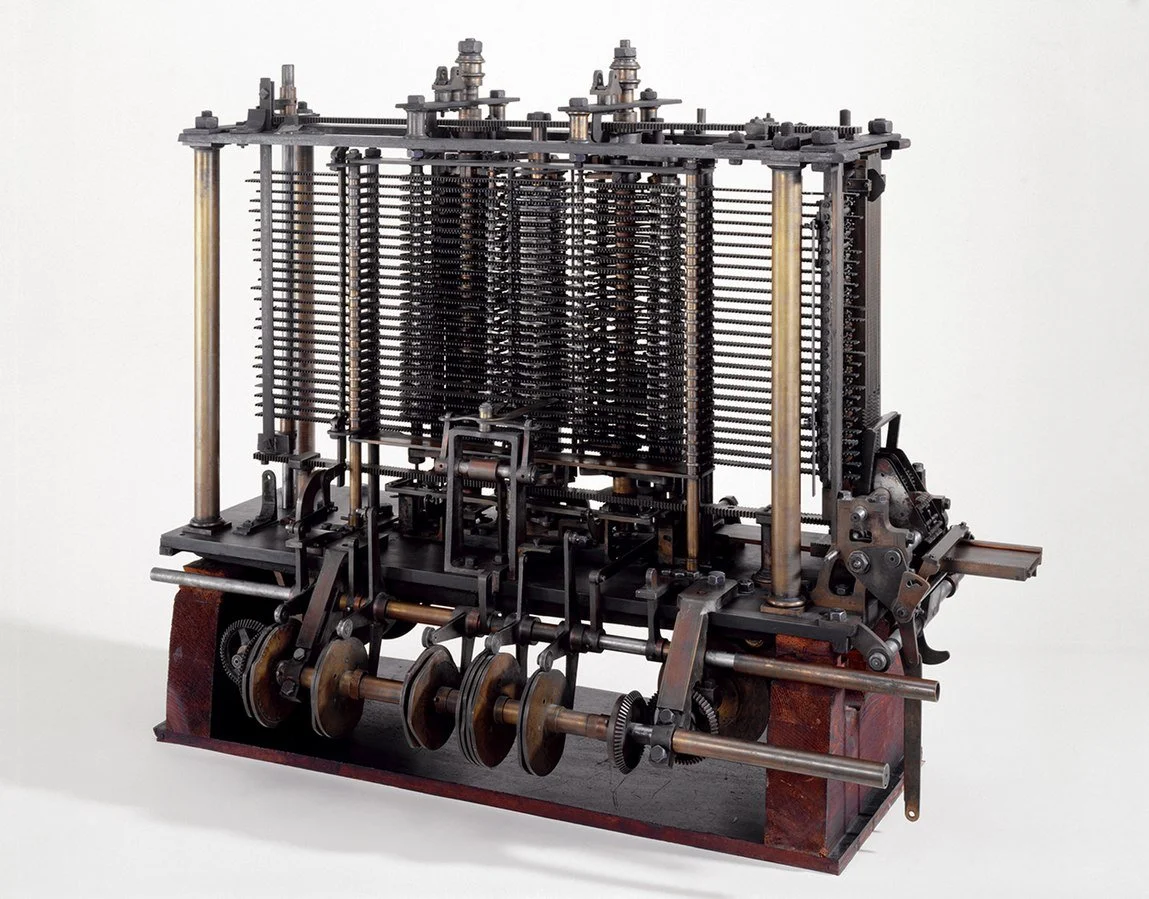
“We might even invent laws for series or formulæ in an arbitrary manner, and set the engine to work upon them, and thus deduce numerical results which we might not otherwise have thought of obtaining. ”
“A computer would deserve to be called intelligent if it could deceive a human into believing that it was human.”

About Us
The Imitation Group works at a specific, underserved intersection:
artificial intelligence and scientific application.
We believe the most powerful AI systems are not just technically capable — they are explainable, auditable, and designed around the real decisions experts need to make.
Our Story
Our founder worked in Machine Learning, Natural Language Processing, Large Language Models, Neural Networks, forecasting, and data mining in the early and mid-2000s, when these fields were not yet considered part of AI. As the discipline shifted from rule-based systems to learning-based approaches, what had been a niche backwater suddenly found itself at the forefront of AI development.
That vantage point — twenty-plus years of working at the technical frontier before it became the mainstream — informs everything we build and every organization we work with.
Current Focus
Our primary work is building AI-powered tools for X-ray photoelectron spectroscopy — systems designed to move XPS analysis beyond manual curve fitting toward defensible chemical interpretation, uncertainty-aware reasoning, data-quality verification, and audit-ready outputs. The goal is not to replace expert judgment. It is to make expert-level reasoning more consistent, transparent, and scalable.
The Imitation Group
Through The Imitation Group, we continue to provide selected AI consulting and implementation work — particularly around responsible AI adoption, human-centered implementation, and practical AI workflows for organizations navigating real concerns about accuracy, ethics, and process.
For AI consulting and training:info@theimitationgroup.com
For XPS / surface-analysis AI collaboration: kde@theimitationgroup.com
“Are there imaginable digital computers which would do well in the imitation game?”
Historical Legacy
Our company name, The Imitation Group, honors Turing's legacy and is named after Alan Turing’s “Imitation Game.”
In 1950, Turing imagined machines capable of advancing beyond their original programming.
We embrace his vision that computers should work for humanity—seeing AI as augmentation, not replacement.
In tribute to the visionaries who laid the foundation for computational thinking:
From Babbage's Analytical Engine, to Ada Lovelace’s invention of programming to Turing's theoretical machines, these pioneers envisioned a world where machines could process information with precision, logic, and purpose—the very principles that guide our work today.